Wednesday, May 1, 2013

Fran Fischer's "Fishducky's Fables"


Hello all, on this, the first day of May 2013. Thank you for all your comments and e-mails encouraging me to take time off and “go with the flow” of the barometer. The temperature was 84° F here yesterday. Today’s prediction is for 74° with rain showers and thunderstorms. Then the temperature dramatically drops to 49° with rain forecast for the next five days. Of course, an erratic barometer will accompany all these temperature changes.
         But enough of this shilly-shallying over barometric changes. I’ve sat on the sidelines, nursing an aching brain, for three weeks now and its time to stand up, do my world-famous shimmy, and shout, “Enough already! I’m reentering the fray!”
         In truth, I really began this reentry on Monday when I visited several of you on your blogs and left comments. For me that was the day I yawned, stretched widely, and decided to say “Phooey!” to headaches and "Yes!" to posting again.
         So, to begin my blog anew, I’m reviewing today a delightful book of humor for all of us who still remember the wonder of our childhood reading of fairy tales and fables.
          The cover of Fishducky’s Fables by Fran Fischer hints at the merriment within. Be warned that if you read this entertaining entry into the humor genre, you may have to relinquish some cherished beliefs about fairy tales. What you learned as a child simply wasn’t true!


         In Fischer’s book, we chuckle over fractured fairy tales like Rapunzel. We guffaw as the author shares with us the reasons for why zebras zig, leopards spot, and kangaroos accessorize with a pouch. These how-did stories are amazingly original. In addition, Fischer weaves tongue-in-cheek magic as she spinningly retells myths about Greek gods, goddesses, and other important people.


         The book closes with two amusingly outlandish stories about Dorian Gray and Frankenstein and a number of nursery rhymes, each ending with a twist that left me grinning at Fischer’s humorous take on all of life.         
         I was drawn to this book because of all the enjoyment I’ve had in reading Fischer’s blog: Fishducky, finally. Every Monday, Wednesday, and Friday for months I’ve depended on her postings to lighten my day with laughter.
         And yet, I seldom read humorous books or books on humor. Several years ago, I did read—and truly enjoyed—the P. G. Wodehouse series featuring Bertie Wooster and his long-suffering manservant, Jeeves.
         And I’ve been a fan of many comedians from radio, television, and Saturday Night Live, among them, Jack Benny, Sid Caesar, Imogene Coca, Flip Wilson, Carol Burnett, Dana Carvey, Lily Tomlin, Jackie Gleason, Billy Crystal, Bob Newhart, Bill Cosby, Tim Conway, Jonathan Winters, Red Skelton, Ernie Kovacs, Dick Gregory, Gilda Radner, Victor Borge, Ellen DeGeneres, Louie Armstrong, and Robin Williams.
         So while I’ve never really read humorous books, I’ve enjoyed many comedians. And now I count Fischer among them. She has a true sense of the ridiculous. She's the bloggers' standup comic. And in Fishducky’s Fables she'll give you the lowdown on how Jimmy Choo’s shoe company got started and on which princess had a happy marriage because of Breath Right Nasal.
         Fischer had me chuckling when I encountered the last line of the King Midas story. She amazed me with her inventiveness in the Little Red Riding Hood fairy tale. And she surprised me with the name of the television show on which Thumbelina appeared.
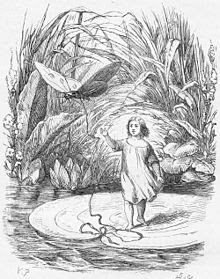

         And speaking of that little girl, according to Fischer when writing about Thumb and her husband, the “word on the street is that they lived reasonably happy ever after.” I’m relieved to know that!
         As well, it’s educational to learn why hares hop instead of run and why elephants have trunks. Not only humorous, but the word charming applies to many of these stories.
         Two of my most treasured childhood books—which sit in pride of place on one of my bookshelves—are Fairy Tales Every Child Should Know, a 1944 gift from my cousin Tommy and Fairy Tales and Stories by Hans Christian Andersen, a Christmas gift from my parents in 1945. Now I have shelved securely on my iPad a third fairy tale book—Fran Fischer’s Fishducky’s Fables. I’m going to post this review and then go to Amazon and Goodreads and give it a five-star review.
         If you delight in originality and seek laughter in your life, you’ll also want to read this book. Enjoy!

Tuesday, April 16, 2013

"Oh, the Weather Outside Is Frightful"


Spring is never easy for someone with Meniere’s disease. Why? Because many of us have Meniere’s headaches, which are like migraines in intensity but without the sensitivity to light. Many foods, such as chocolate, tomatoes, strawberries, and dairy, can trigger these headaches. But most often the trigger, at least for me, is a precipitous barometric change.
         I live in a part of Missouri that is known as tornado alley and so the weather here is volatile, especially in spring and the bar graph on my barometer bops up and down like a roller coaster. Then come the headaches and I toddle off to bed, chant a mantra, and try to distract myself so that I don’t think about the ache in my brain! Medication can help if I take it soon enough to nip the ache in the bud. But sometimes the headache wins the race and just assumes a life of its own within my brain.
         These headaches keep me from thinking clearly and so reading and responding to blogs become somewhat difficult. Even writing my own postings takes a number of hours just to make some sense out of what is swirling around in my mind. This posting is taking much longer than you would think.
         I haven’t visited your blogs to read and comment in a week. Moreover, the forecasters are predicting many days of rain.
         So once again I’m going to drop out of sight for a few more days. I hope to post on this blog next Wednesday, the 24th. If all goes well, I will. I won’t be posting on my word-crafting blog this coming Sunday, but hope to return to it on the 28th.
         I do miss reading your blogs as I find so interesting your lives and stories and this A to Z Challenge with which many of you are engaged.
         I hope all of you are enjoying spring and that those of you who have these headaches, for whatever reason, are able to take some time off and simply rest.
         Peace to you and thank you for all the empathy I know you are feeling for me right now. Blogging has surely opened up my world. Please believe me when I say that I cherish the friendship so many of you extend to me.  

Wednesday, April 10, 2013

Anklets, Saddle Shoes, and Droplets


Last week you learned that I pee when I laugh too much. This happened a lot in grade school. In fifth grade I began my friendship with the bus driver because of blotches left by pee. He found a way to deal with the problem without embarrassing me.
         In seventh grade I also met gentleness with regard to my peeing. But this time I knew real embarrassment.
         The incident began when Sister Mary McCauley, our seventh grade teacher, asked our class to speak for three minutes about something that interested us.
         One by one we walked resolutely up to the front of the room. The boys mostly talked about wars and westerns. One of them had been to Yellowstone and described Old Faithful. The girls related how she’d learned to play the piano. Several talked about their favorite movie stars. One classmate had seen the Atlantic Ocean and talked about the thunder of its waves.

             
         When my time came, I hurried down the aisle to the front of the room. Already a history buff, I’d chosen to talk about the Liberty Bell that hung in the Pennsylvania State House in Philadelphia.
         The boys knew my weakness because we’d all gone through grade school together. So as soon as I started talking, they crossed their eyes and tried on their most grotesque faces. I started giggling.
         Then it happened: pee trickled down my legs. I tried holding them tightly together, but that only made the boys redouble their efforts.
         More drips and dribbles.
         I stood in a spreading puddle of pee.
         I had to talk for three minutes to get a good grade, so I forged on with facts and dates.
         More seepage.
         The pee wet the tops of my white anklets.
         The puddle kept spreading around my white and brown saddle shoes.
How much pee does a kid’s bladder hold? I wondered.
Finally, I finished and raced down the aisle to my desk. Maybe when I sat down, the pool of pee would magically disappear.
         Sister Mary McCauley’s voice brought me to a halt. “Dolores, there seems to be a wet spot on the floor. Would you please get a rag and wipe it up. I’d appreciate that.”
         The boys guffawed; the girls tittered.  
         I got a rag from the closet, wiped up the puddle, trashed the sodden cloth, and sat down quietly at my desk. Behind me, a classmate who was sweet on me whispered, “I liked your speech best.”
         Well, at least it was the most entertaining. A real show-and-tell.

Wednesday, April 3, 2013

The Busdriver and the Blotch


The fifth grade holds many memories for me. During its first three months—September, October, and November of 1946—a neighbor daily molested me in his car. This happened as he drove my brother and me and his own children to and from St. Mary’s Grade School. In January, I wrote three postings about Mr. Jackson. To read the first of those three, click here.
            The fifth grade, however, also holds wonderful memories for me. Sister Mary McCaulay began to teach us how to craft sentences. Late last year, on my writing blog, I shared three stories about how she began with prepositions, then introduced the building blocks of sentences, and finally helped us construct paragraphs. Thus began my love affair with words and writing.

            My introduction to the memorizing of poetry also enhanced fifth grade. I mentioned the joy of this in my posting last Wednesday.
            A final memory from fifth grade always brings a smile to my face. I hope you, too, will enjoy this story.
            After my parents confronted Mr. Jackson, I rode the city bus to school. Its route brought it out into the countryside. Each morning I’d climb aboard the bus at the juncture of Kentucky and Dickinson roads.


A 1930s school bus that came before the yellow ones we’re now used to.

            When school ended each day, I could either board the bus by St. Mary’s or walk down Liberty Street and hail down the bus whenever it came by. I mostly chose to do the latter because that meant I could walk several blocks with my best friend: Barbara Ann.
            I shared two stories about Barbara Ann way back in October 2012. The first had to do with preparing to receive First Holy Communion. The next concerned the mishap on that day of celebration. We were in second grade then and we remained fast friends throughout grade and high. Our friendship endures and she called me for my birthday on Monday.
            By the fifth grade, Barbara Ann and I had become connoisseurs of giggling. Gigglers par excellence. Anything and everything could make us giggle. And did.
            Daily we walked down Liberty Street giggling about what Jackie had said when Sister Mary McCaulay asked him to pick his favorite preposition. Giggling about what John Tom had for lunch. Giggling about what an astounding jump-rope jumper Judy was. Our giggling itself made us giggle.
            And as we giggled, the pee began to dribble down my legs, wetting my cotton panties. I’d walk nine blocks with Barbara Ann, giggling and peeing all the way. Then she’d turned left to go down the street to her home and I’d wait for the bus to wheeze to a stop and pick me up.
            The seats in this bus were leather or something that seemed like leather. Maybe naugahyde. So of course, when I sat on them with wet panties, I left an imprint—a large wet blotch. And since I mostly sat in the same seat each day, that blotch got bigger and darker and more obvious as the school year went on.
            Finally one day in early April, I boarded the bus, greeted the welcoming driver, and started down the aisle. Before I could go more than a step or two, he called me back. “Dolores,” he began in a whisper, “I can’t let you sit down on the bus anymore.”
            “Why?”
            “The boss said so.”
            “So I can’t take the bus?”
            “Oh, you can ride. You just can’t sit down." He paused and then whispered more softly. "Do you know why?”             
             “Did I do something wrong?”
            “It’s the spots you leave behind.”
            Oh.
            “Do you want me to walk home?”
            The road out into the countryside was narrow with one lane going each way and deep culverts along the side. Cars came barreling down that country road. In truth, I was a little scared to walk those three miles home.
            “No, Dolores. As I said, you can ride the bus home, but you’ll just need to stand up here instead of sit.”
            “Stand here by you?”
            “You can stand in the stairwell. And we can talk.”
            During those final weeks of fifth grade, the bus driver and I became fast friends. I told him about my classmates and what we were learning. He told me about his two preschoolers and the funny things they did.
            We talked about the Blues—they were the Kansas City Triple A baseball farm team for the Yankees. And we talked about reading. He liked Zane Gray and I liked fairy tales and books like Hans Brinker or the Silver Skates: A Story of Life in Holland and Peter and Wendy.

Hans Brinker tying on his sister Gretel’s ice skates.
            
The friendship between the bus driver and myself continued throughout all the years I took the bus home because that stairwell became Dolores' throne. The truth is that I never stopped giggling with Barbara Ann . . . and I never stopped peeing!

All photographs from Wikipedia.

Wednesday, March 27, 2013

A Review of Weeds


The songs my mother sang to me were the first poems I heard as a child. The lyrics of many of those songs remain with me. I still sing them as I drive. Fill the dishwasher. Vacuum up the cats’ fur from the carpet.
            My mom sang poetry; my dad recited it to me as nursery rhymes. I was “Mary, Mary, quite contrary,” who was asked, “How does your garden grow?” I was that rascal Jack, nimbly jumping over a candlestick.

            My grandmother was “Old Mother Hubbard [who] went to the cupboard to get her poor dog a bone.” And that dog was Smokey with whom my grandmother lived, or Kentucky, my young brother’s dog.

            Songs, nursery rhymes, and then in fifth grade the required memorizing of a new poem each week: “The Owl and the Pussy Cat,” “Little Orphant Annie,” and “The Modern Hiawatha,” which was by far my favorite and which I still delight in reciting today—much to my listeners’ chagrin—some sixty-six years later.
Since those fifth grade days of being exposed to a wide range of poetic language, I’ve read and responded to poems from poets of both the past and the present. Two bloggers—Penny and Teresa Evangeline—have introduced me to a number of contemporary poets who have enriched my life in the past two years. Repeatedly poets reveal to me the light at the end of the tunnel. More often they help me realize the deep down humanity and thirst for goodness that is the essence of each of us.
And so today I want to tell you about Weeds, a book of poetry I’ve just completed by a blogger many of you may know: McGuffy Ann Morris. I’ve had the book on my bedside table for over a month now, picking it up each evening, reading a poem, and then considering what it offers me: the truths about my own experience of life.
In Weeds, Morris offers us the wisdom of the years she’s spent here on this planet we call Earth. It is a wisdom hard won and for that reason treasured. She is both observer and muse. Here are just three samples of her poetic observations:

            From “Book”
            Life is an open book
            Each person a character
            pasted on a page of time.

            From “Battle”
            I go back in time,
            the battlefield of memories.
            I need to recapture
            Moments lost, moments stolen,
            Looking for myself
            As I really am, not as you
            Perceive me to be.

            From “Median”
            Reflections fade into shadows.
            What I once was has faded;
            What I am yet to be becomes clear.
            I did not choose to be here,
            To be a part of this.
            Forever now will I be both
            Reflection and shadow.
           
In Weeds, Morris moves back and forth between the antipodes of life—from difficult to glorious. As a reader I saw her struggles as well as her triumphs. And yet, as with all poems that come from the depths of the human experience, I also found myself for she presents the realities of our lifelong journey through time and space, memory and experience.
The only slight hesitancy I had in reading Weeds is that I’ve come to enjoy unrhymed poetry more than rhymed. Several of Morris’ poems rhyme and when I first read them I found myself testing out the rhymes rather than reading for what the poem had to offer me in terms of my own experience of life. But as soon as I reread without stressing rhyme, I discerned the message that existed—for me—within the poem.
That is, I believe, a sign of good poetry—that it speaks to the human condition as each of us live out that condition in our own lives. I encourage you to read Weeds and to find yourself within its poems.
As Morris says on the book cover of Weeds, which I believe is her anthem to life, “There comes a time to assess and to weed our lives, in order to find value in the harvest. This book is a culmination of personal lifetime experiences and observations. To each, their own.”